City encourages residents to participate in voluntary tree replacement programme
10 March 2023
The City of Cape Town
is calling on residents to participate in a voluntary tree replacement
initiative as we are busy removing beetle infested trees from public owned
land. Alderman Eddie Andrews, the City’s Deputy Mayor and Mayoral Committee
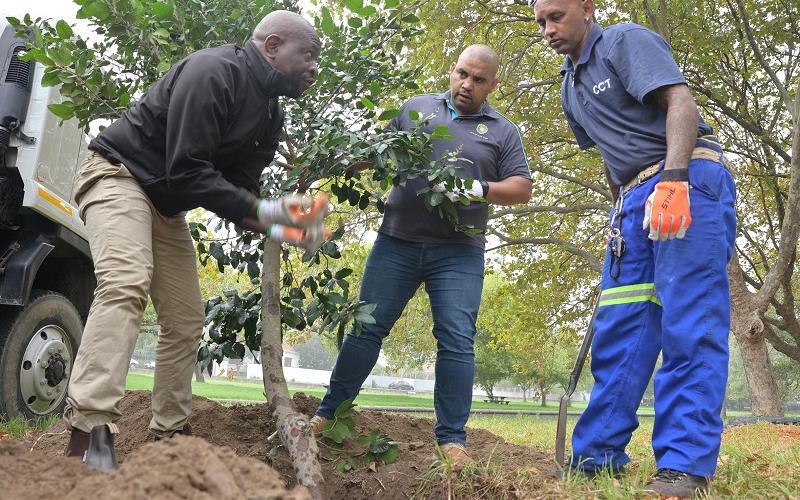
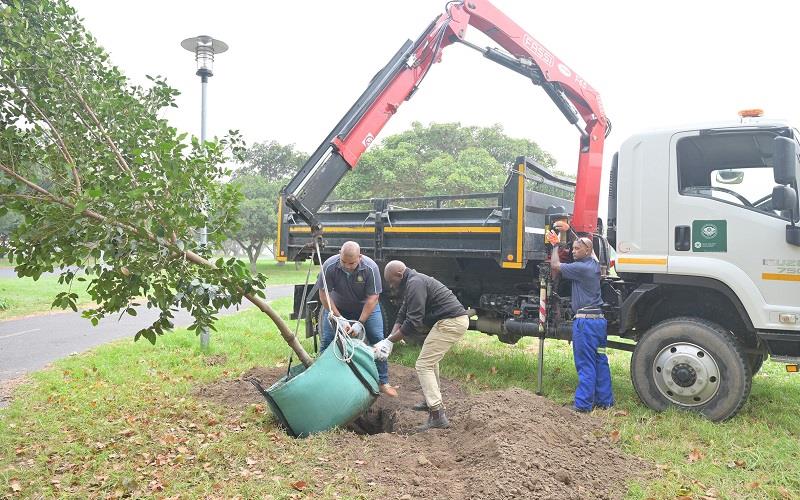
Member for Spatial Planning and Environment, planted the first replacement tree
– an Assegai tree, or Curtisia Dentana – a locally indigenous species, along
the Liesbeek River in Mowbray earlier this morning, 10 March 2023.
'This morning, I planted an Assegai tree along the Liesbeek River in Mowbray where we are busy removing trees that are infested with the Polyphagous Shot Hole Borer beetle (PSHB). This is a symbolic act to demonstrate that devastated as we are about the beetle pest and the impact it is having on our urban forest, there is much we can do to limit the damage – planting an indigenous tree, suitable to our climate and the specific site, is one example.
'The Assegai tree is a locally indigenous tree, occurring in the kloof forests on the Peninsula and therefore, well adapted and suitable to Cape Town's climate. Also, as far as we know, the Curtisia Dentana is not a reproductive host tree, meaning, to date, the PSHB has not been sighted in these trees which makes it a good replacement choice,' said Alderman Andrews.
The Assegai is a small to medium, very neat, evergreen tree that usually grows to a maximum of 12 meters. They are fast growing and do very well when sheltered from strong winds. They produce attractive yellow fruits that are relished by birds.
The City is working on a comprehensive list of recommended trees – indigenous and mostly locally indigenous, and not known to be prone to PSHB infestations – that residents can plant to replace those trees we will have to remove because of the beetle pest.
At the moment, the following trees are recommended:
- Assegai tree (Curtisia Dentana)
- White milkwood (Sideroxylon inerme) – a well-known, large tree that does well in coastal sands
- Camphor bush (Tarchonanthus camphoratus) – very tough, small multi-branched tree, that does well on the Cape Flats
- Water pear (Syzigium quineense) – a medium to large classic park type tree
The City started removing beetle infested trees along the Liesbeek River corridor
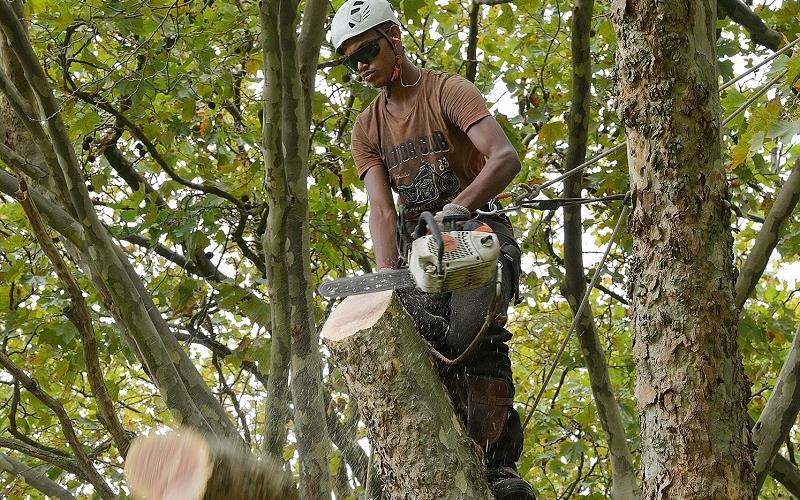
The City started removing beetle infested trees along the Liesbeek River corridor
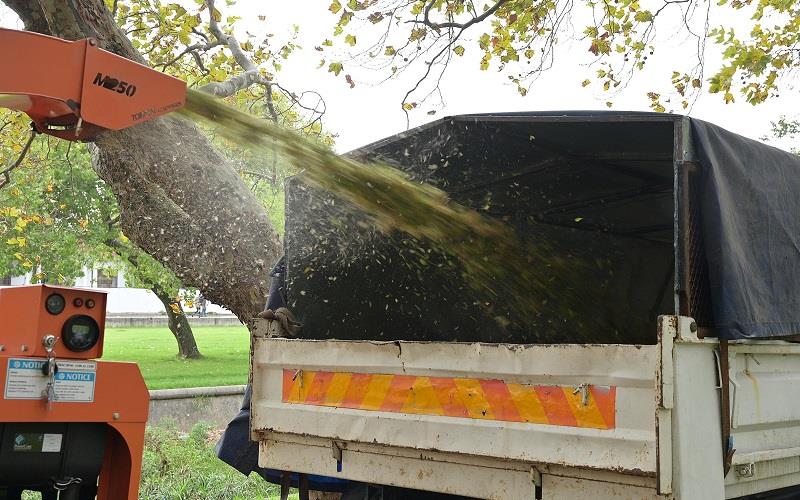
The City started removing beetle infested trees along the Liesbeek River corridor
The City started removing beetle infested trees along the Liesbeek River corridor
'We will make the list of recommended trees available on the City's website, and will add to it in coming weeks. Residents can use it as a guide to participate in a voluntary tree planting effort. In the meantime, we are finalising our official tree replacement programme to replace those infested trees we have to remove from City-owned land,' said Alderman Andrews.
The City started removing infested trees along the Liesbeek River corridor, near the N2 highway and Liesbeek Park Way, with chainsaws and wood chipping machines on Wednesday, 8 March 2023. The beetle infested biomass is being transported to an appropriate site for incineration.
'Unfortunately, infested trees have to be chipped as this is the only scientifically proven method to prevent the spread of the pest to other areas in Cape Town. This is a huge loss to all of us living in this city that is blessed with natural beauty, from Table Mountain, to our coastline and the thousands of trees lining our streets, and in our parks. Sad as it is, we can limit the loss of our urban forest by planting trees to replace those we will have to remove in coming months. We have also hosted a very successful PSHB training session in Muizenberg yesterday for small businesses dealing with plant material. Over 40 people attended. A similar training session will be hosted at the Helderberg Nature Reserve next week,' said Alderman Andrews.
Latest update about the beetle pest:
- By 9 March 2023 the City recorded 191 infested trees, 104 on City-owned land and 87 on private properties in the southern suburbs
- Most infested and affected trees in the Southern suburbs are Boxelder, London Plane, English Oak and Grey Poplar
- Areas affected are Newlands, Kenilworth, Mowbray, Rondebosch, Observatory and Wynberg
- Currently, priority is given to the removal of Boxelders from City-owned land along major transport routes.
Do's and don'ts:
- Do not move any plant or tree material from areas with confirmed cases of PSHB, such as Somerset West, Newlands, Kenilworth, Mowbray, Rondebosch, Observatory and Wynberg
- When handling plant material, inspect the tree for PSHB symptoms
- Clean gardening and other tools before and after use and disinfect vehicles used to transport green waste
- Transport green waste in closed and sealed bags, or cover the back with a sail cover
- Avoid routes passing through areas with PSHB infested trees
- Buy firewood where you are going to use it
- Don't fall for fake remedies. There is no known cure as yet
What to look out for and symptoms of infested trees:
- Branch dieback – cracks on the branch; discoloured leaves; dry and leafless branches; branch break-off revealing webs of galleries filled with black fungus
- Gumming – blobs of goo coming out of the bark; oozing of liquid and gum from the beetle holes
- Entry and exit holes – very small holes on the bark of the tree, the size of a sesame seed (2mm); shotgun-like scars developing around the holes
- Staining – brown or dark stains on the bark of the tree
Important: infested trees must be chipped on site and may not be removed from the property as the removal of the chipped wood will spread the pest to other areas.
How to report PSHB beetle sightings
What to do with infested trees:
- Chip the tree, place the infested material in refuse bags, seal it and put these in direct sunlight for at least six weeks
- Dump the chips in your compost heap as the heat build-up will kill the beetle
- Burn infected wood at appropriate incineration facilities
- Seek assistance from trained and equipped service providers with sound knowledge of PSHB
- Do not move plant/tree material/firewood outside of areas where PSHB has been confirmed to be present to other areas
- Do not transport any form of green waste in open vehicles, cover it with sail covers even if no PSHB has been identified as such green waste.
- Clean tools and equipment used to trim/cut/prune plants
The City will try its best to respond within 10 working days to verify a reported sighting. However, the response time will depend on the number of sightings reported.
Caption 1 and 2: Earlier this morning, 10 March 2023, Alderman Eddie Andrews, the City's Deputy Mayor and Mayoral Committee Member for Spatial Planning and Environment, planted an Assegai tree along the Liesbeek River in Mowbray. To our knowledge, the Curtisia Dentana is not a reproductive host tree, meaning, to date, the PSHB has not been sighted in Assegai trees which makes it a good replacement choice. The City is encouraging residents to participate in a voluntary tree replacement initiative as we are fighting the PSHB infestation that is posing a serious threat to Cape Town's urban forest.
Caption 3 and 4: The City started removing beetle infested trees along the Liesbeek River corridor, near the N2 highway and Liesbeek Park Way, with chainsaws and wood chipping machines on Wednesday, 8 March 2023. The PSHB infested biomass is being transported to an appropriate site for incineration.
End
Published by:
City of Cape Town, Media Office